
Iztri
Iztri
Making clothing care as quick to book as groceries, for Bengaluru's gated societies and bachelor flats.
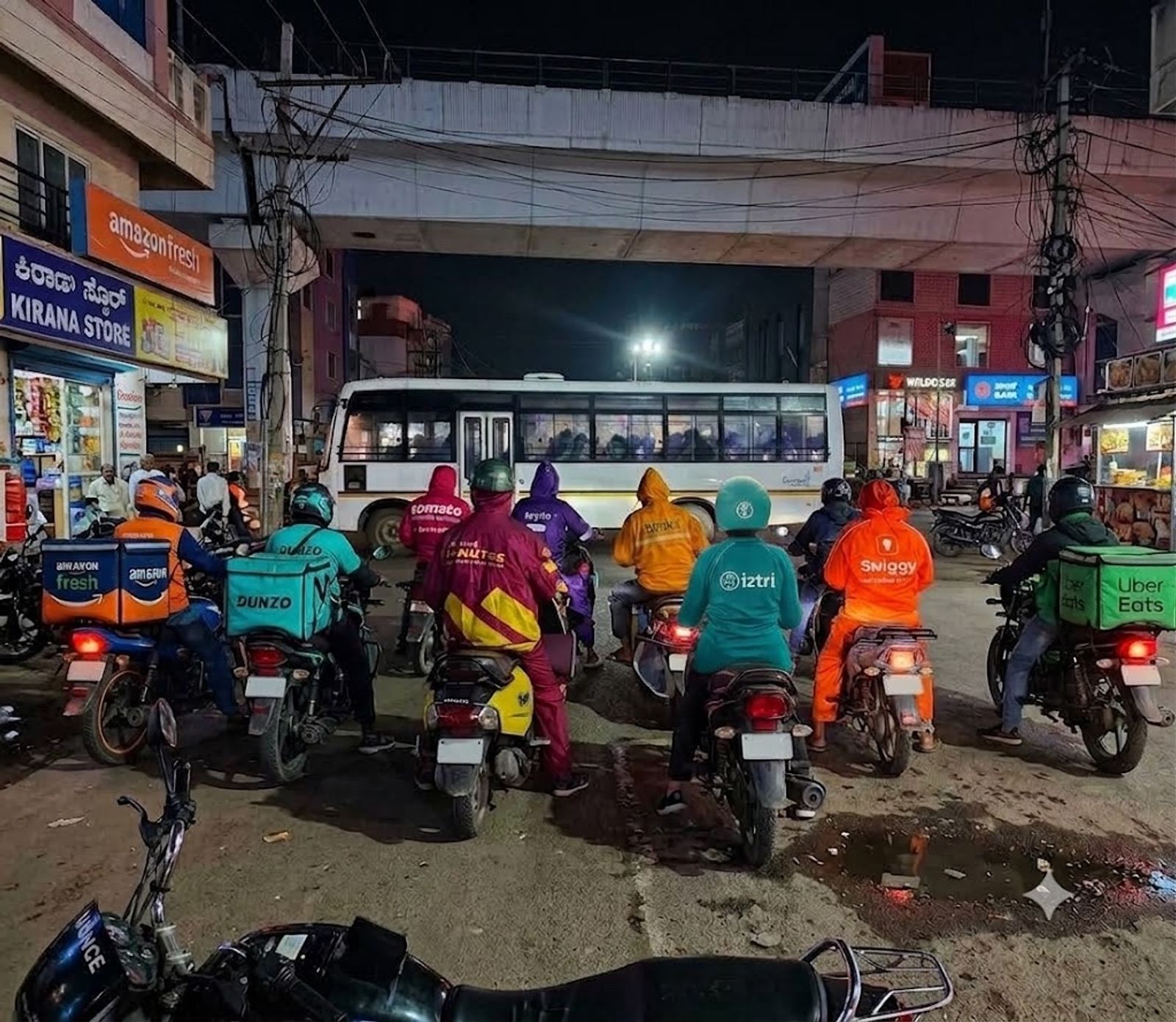
- 5L+families trust Iztri across Bengaluru
- 24 hrssteam-ironing turnaround, with doorstep pickup
- 5 hrsIztri Express, for when it can't wait
- 12hubs, from Koramangala to Electronic City
Iztri is a Bengaluru fabric-care service: steam ironing, dry cleaning and shoe care, picked up from your door and returned folded in crease-free packaging.
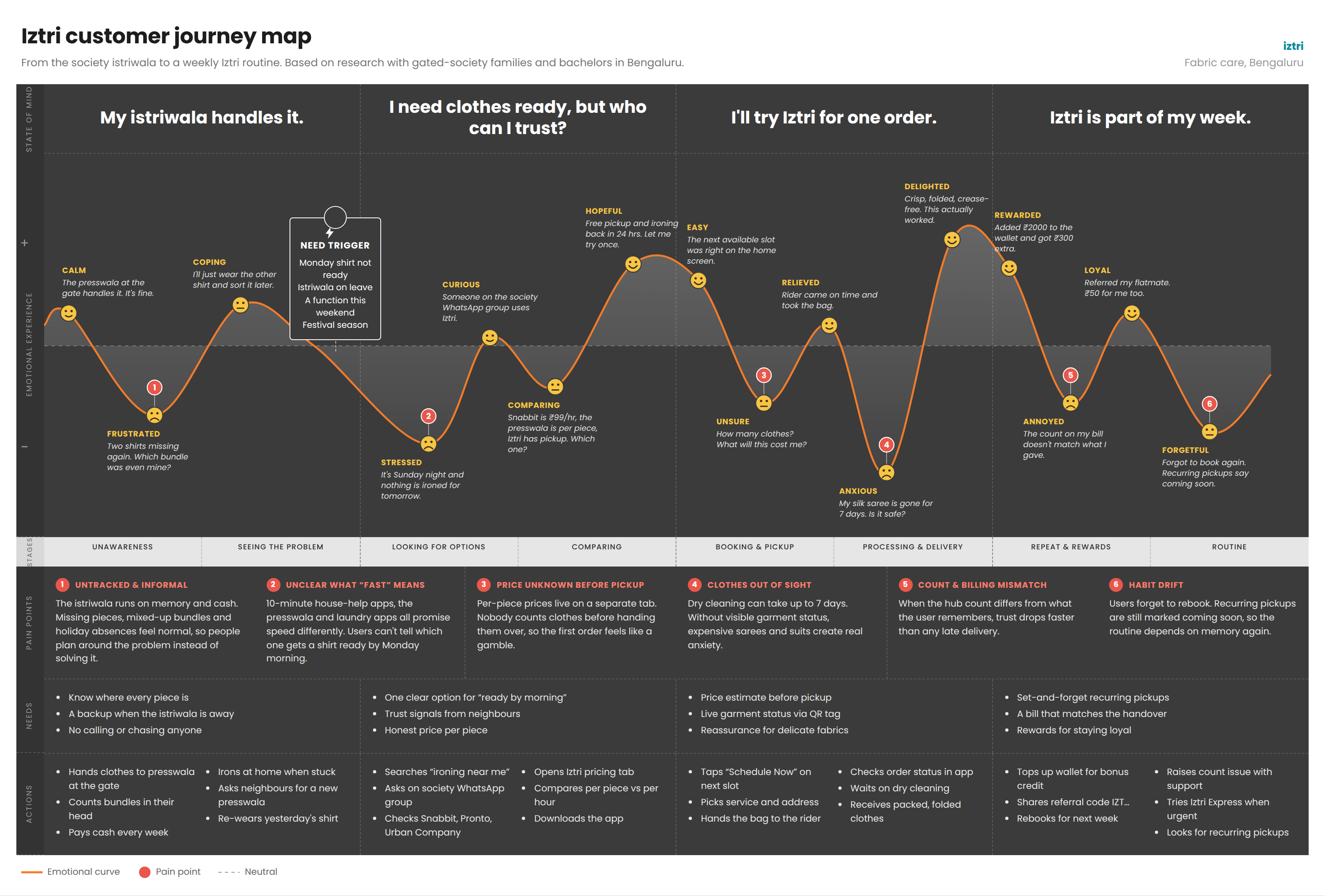
Ironing is one of the most repeated chores in an Indian home, and one of the least designed. Most people still depend on the society istriwala, a cart at the gate who works on trust, cash and memory. It works until it doesn't: the shirt you need for Monday isn't back, a silk saree comes back with a shine mark, or nobody knows which bundle is yours.
I worked on the Iztri app to turn that informal ritual into something you can book in seconds and trust every week. We spent time inside gated societies and bachelor flats to understand when clothes actually need care, how much people are willing to pay, and how new quick-service apps like Snabbit, Pronto and Urban Company's Instahelp are changing what "fast" means to them.
Background
Bengaluru's newer neighbourhoods, from Sarjapur and Kanakapura Road to Electronic City, are built around large gated societies and dense rental clusters full of young working professionals. Both groups generate a steady weekly pile of clothes, and both have outgrown the neighbourhood presswala.
At the same time, the city has been trained by quick commerce. Groceries arrive in ten minutes, and house help now does too. Iztri had to decide what speed means for clothes, where a fast pickup matters far more than a fast return, and the finish has to be right every time.
My role
I owned user research in societies and bachelor clusters, mapped the end-to-end service blueprint, and designed the app's home, booking and pickup flows.
Who we studied
We split our research between the two groups who make up most of Iztri's orders. They share a problem, but live on completely different clocks.
Gated societies: the planned household
Families of three to five, one person managing the home. Clothes pile up across the week and go out in large, mixed batches.
- Already uses an istriwala, but tracks bundles in their head
- Worries most about sarees, silks and kids' uniforms
- Books ahead, likes a fixed weekly slot
- Trusts what neighbours on the society WhatsApp group use
When they think about laundry: weekends and before functions.
Bachelors and PG residents: the last-minute professional
Working professionals in shared flats and PGs. Small batches, mostly office shirts and trousers, almost always remembered too late.
- No istriwala relationship, no iron at home
- Realises on Sunday night that Monday's shirt isn't ready
- Price-aware per piece, but pays for speed when stuck
- Wants to book in one tap and never call anyone
When they think about laundry: Sunday night, Monday morning.
The moments that trigger an order
Nobody opens a laundry app for fun. Across both groups, orders started from a small set of recurring moments, and each one asks for a different kind of speed.
- Sunday nightOffice clothes for the week aren't ready. Needs a pickup tonight and delivery by morning.
- Istriwala on leaveThe regular person is away for a festival or back home. The household needs a replacement for a week.
- A function this weekendA saree, lehenga or suit needs dry cleaning and must come back without damage.
- Season changeDuvets, woollens and curtains, once or twice a year, big and awkward to carry.
Service blueprint
Clothes care is a physical service wearing a digital front. To design the app well, we first mapped everything that happens off screen, from the moment someone notices a pile of shirts to the moment a folded, tagged packet reaches their door.
- 1 · NoticeCustomer sees the pile, or remembers a function or Monday meeting. App: home shows the next available pickup up front. Hub plans capacity per slot.
- 2 · BookPicks a service, a slot and roughly how many clothes. Pain point: hard to estimate count and price before pickup. Rider route assigned by the hub.
- 3 · PickupHands over the bag at the door or society gate. App shows rider details and live arrival. Pain point: society gate entry and guard approval delays.
- 4 · ProcessChecks the app, wonders if the saree is okay. App tracks garments via QR tag status. Hub counts and QR-tags every garment; count mismatches cause billing disputes.
- 5 · DeliverReceives folded clothes in packaging. Delivery OTP and bill in the app. Rider delivers within the slot; hub does spot removal, dry clean, steam iron and pack.
- 6 · RepeatBooks again, or sets a weekly slot. Rewards, referrals and repeat pickup in the app. Rider collects the next bag in the same visit; the hub learns household preferences.
Pain points we found
- Hard to estimate count and price before pickup.
- Society gate entry and guard approval delays.
- Count mismatches cause billing disputes.
The blueprint made one thing clear: most anxiety sits between pickup and delivery, when the clothes are out of sight. Booking is short; waiting is long. So the app's real job is to make the invisible part visible.
Price points and the quick-service landscape
People didn't compare Iztri only with other laundries. They compared it with the istriwala at the gate, and with the new wave of 10-minute house-help apps that can also iron a few clothes during a booked hour.
- Society istriwalaPer piece, cash. Price varies by area. Next day, if available. No tracking, no dry cleaning, disappears on holidays.
- IztriPer piece, by service: steam ironing from ₹10, dry cleaning from ₹12. 24 hrs, or 5 hrs with Express. Needs a pickup slot, not instant.
- SnabbitTime, by the hour, from ₹99/hr. Help at the door in about 10 min. Hand ironing inside a cleaning hour, no dry cleaning or packaging.
- ProntoTime, by the hour. 10 min, instant or recurring. General chores, not garment care.
- Urban Company InstahelpTime, by the hour. Instant. General chores, not garment care.
Competitor prices from their public websites and press coverage, September 2026. Prices change often.
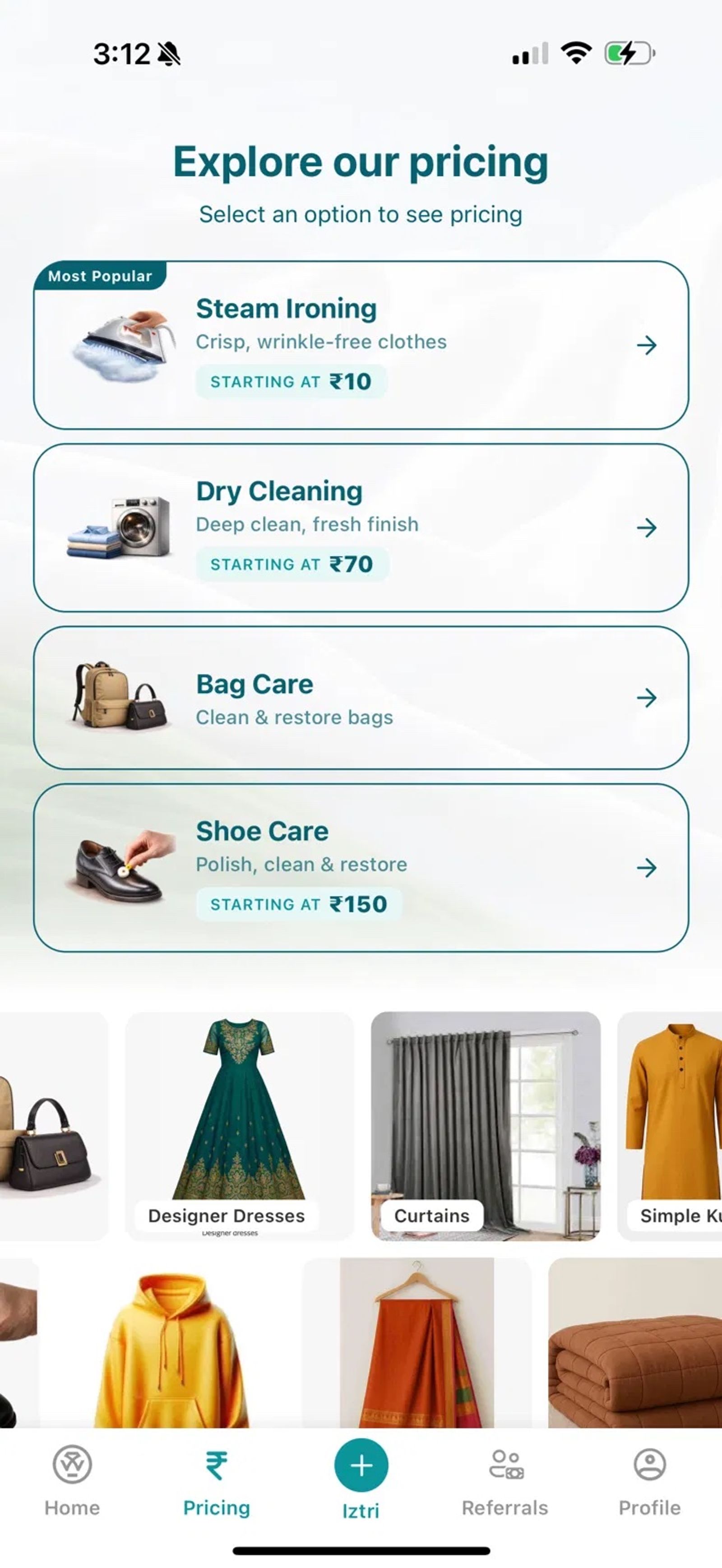
The quick-service apps sell time. You get a person for an hour and hope ironing fits between the dishes. Iztri sells an outcome: a known price per garment, a professional finish and a promised return time. That difference shaped our pricing screen. Instead of hiding costs until pickup, we show per-piece prices up front and let people see an estimate before they commit.
The opportunity
Be as easy to start as a 10-minute app, and as dependable as the istriwala you trust.
Speed matters most at the start of the journey. People want a pickup confirmed right now, even if the clothes come back tomorrow morning. That led us to a fast "starter" booking: one tap from the home screen to a confirmed pickup slot.
- How might we let a bachelor book a Sunday-night pickup in under 30 seconds?
- How might we show a price before pickup, without making people count every shirt?
- How might we make clothes feel safe while they're out of sight?
Screens
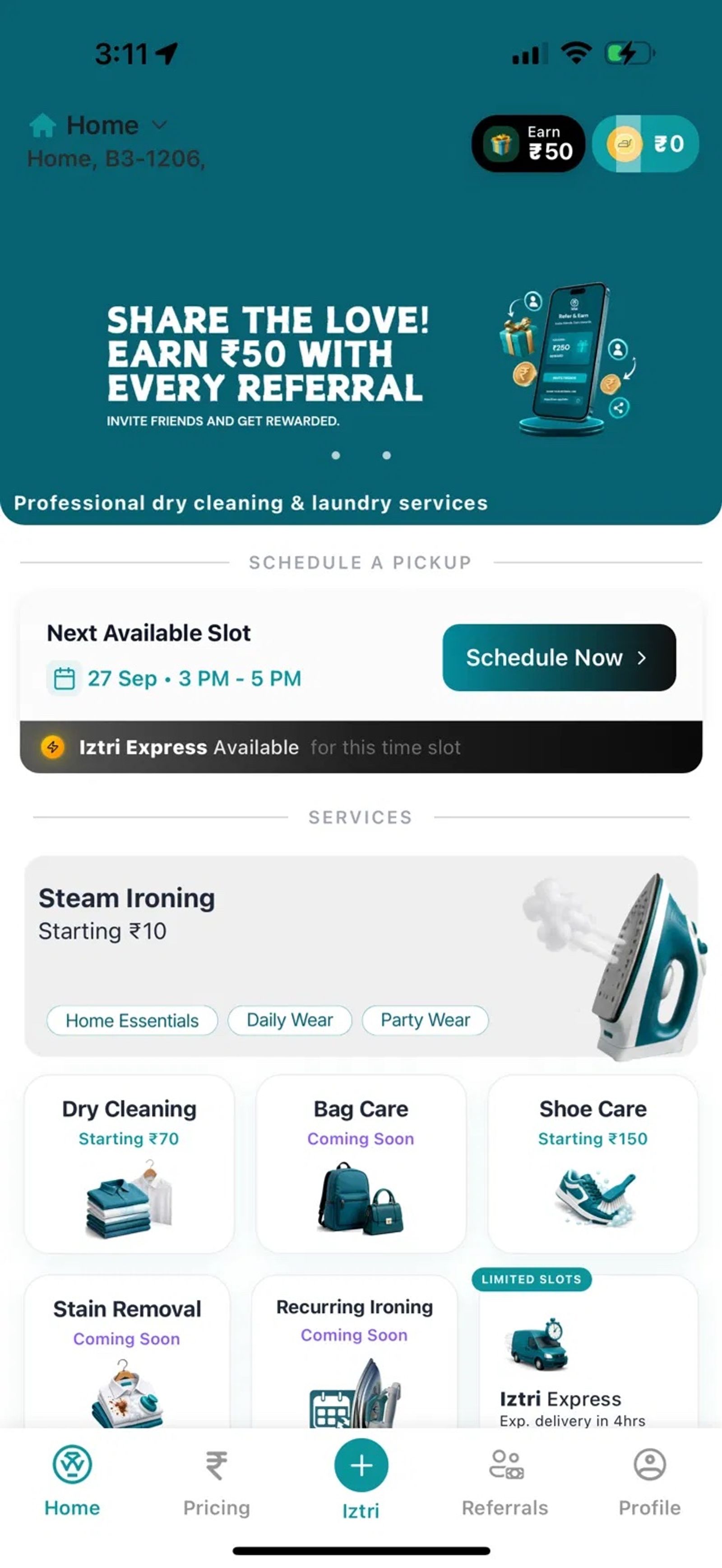
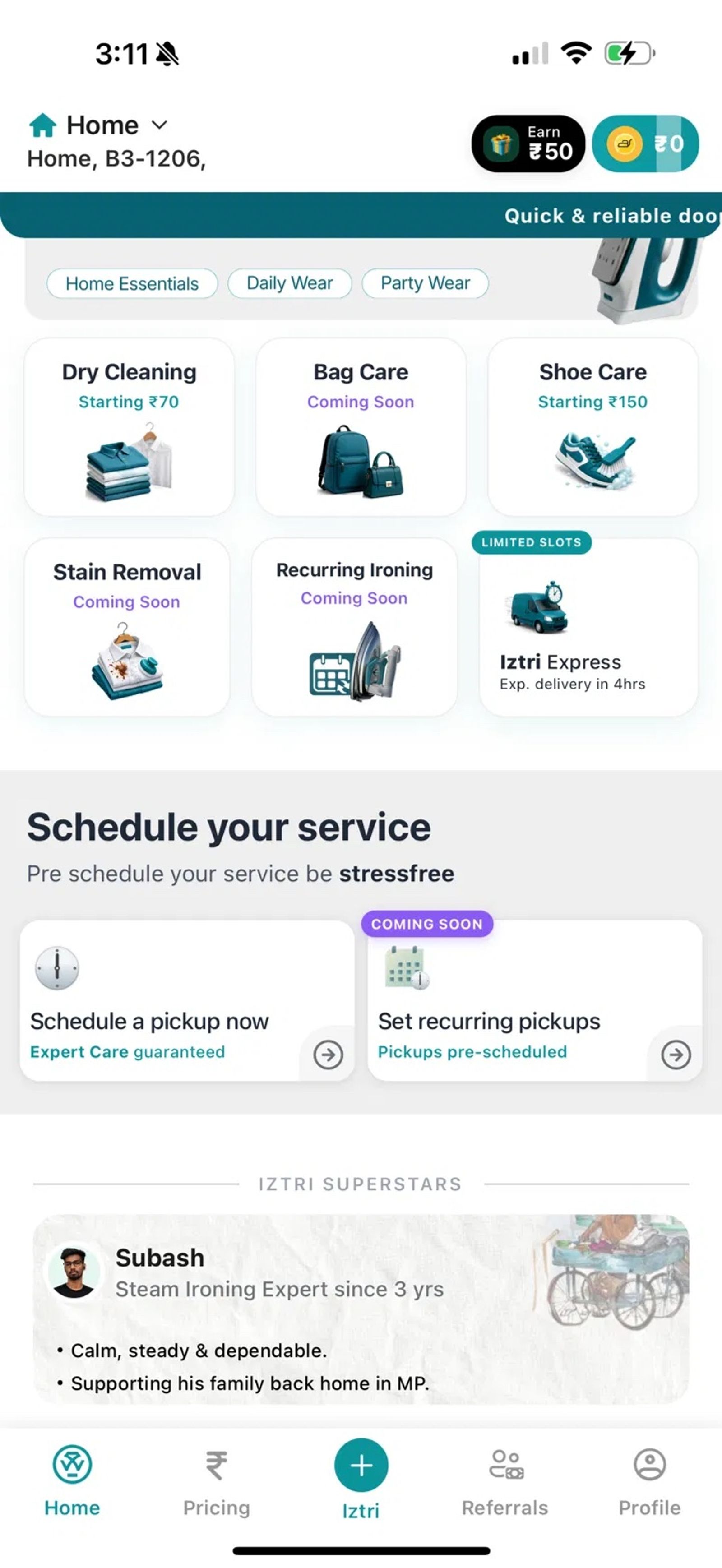
The shipped app puts booking first. The next available pickup slot sits at the top of home, and everything a returning customer needs to start an order is visible without scrolling.
- Pickup comes first. The next available slot and Iztri Express availability sit at the top of home, one tap from a confirmed pickup.
- Iztri Express gets its own tile. The card separates urgency from the everyday services, so Sunday-night users find it instantly.
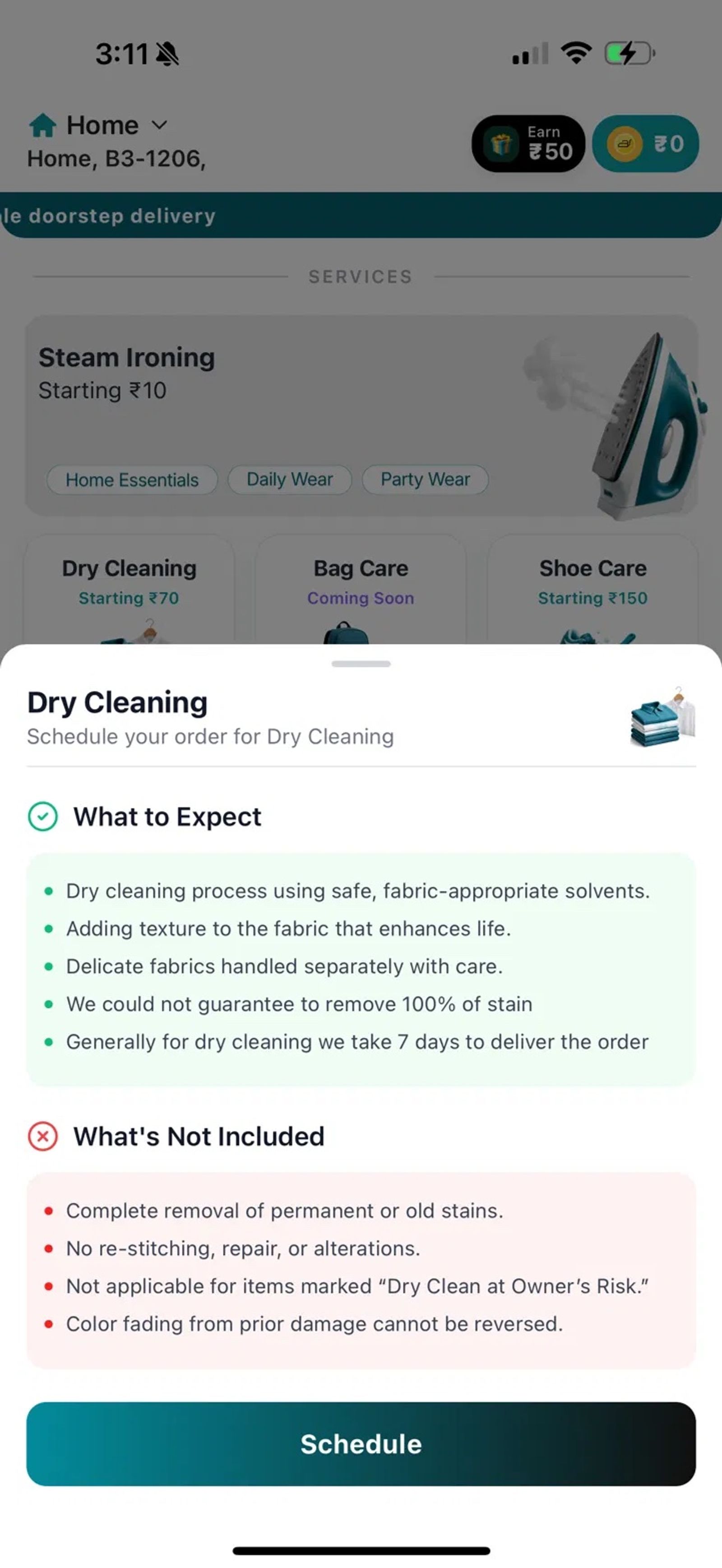
- Services are tagged by occasion, not fabric. "Home essentials", "Daily wear" and "Party wear" match how people described their clothes in interviews.
- Prices and expectations before commitment. Every service shows a starting price, and dry cleaning spells out what's included and what isn't before you schedule.
Design iterations
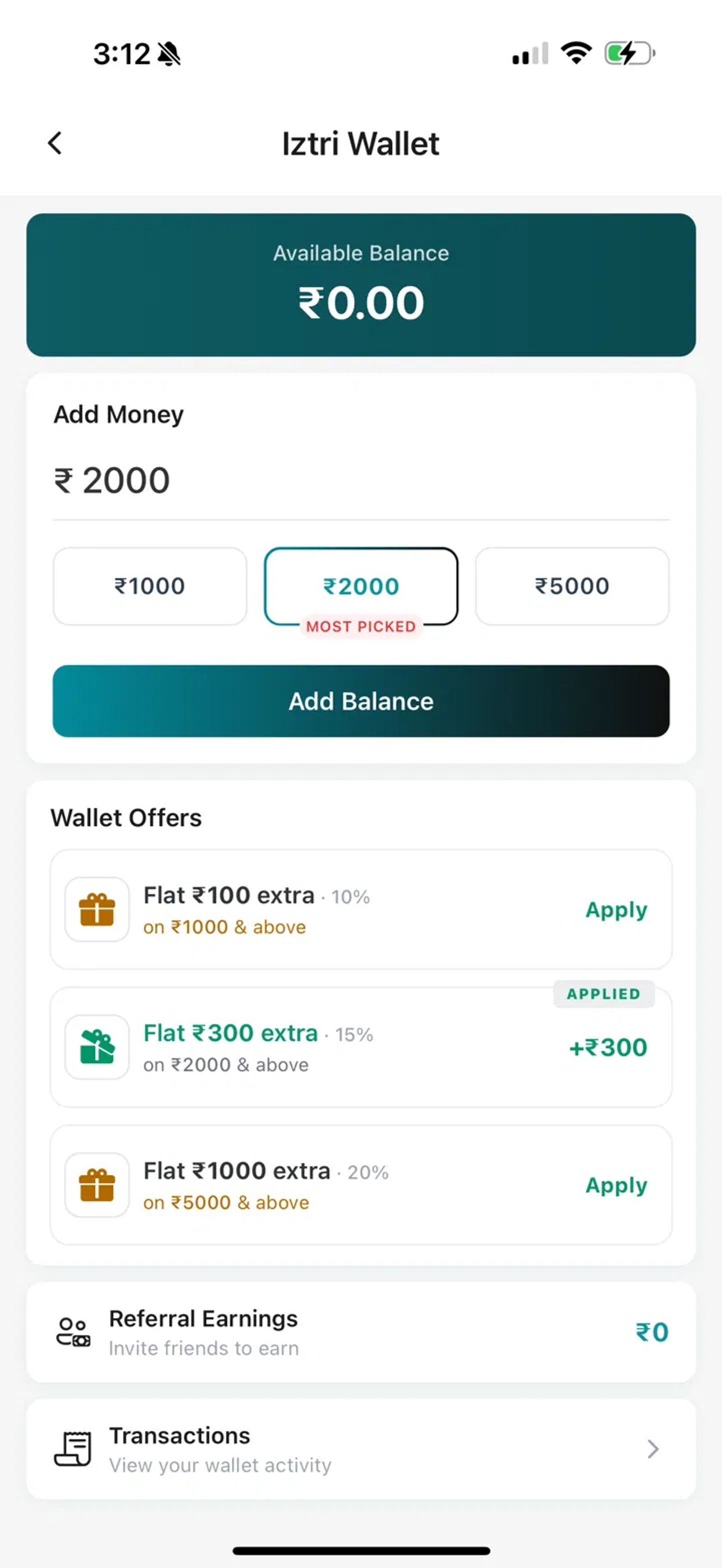
The flows as they shipped, across booking, pricing, scheduling and rewards.
Outcome
How each stage of the journey changed. Results are added as the numbers come in.
Outcome blueprint
-
1Notice
BeforeClothes pile up; the istriwala may be awayWhat shippedNext available slot shown first on home -
2Book
BeforeHard to estimate count and price before pickupWhat shippedStarting prices up front; what's included is spelled out -
3Pickup
BeforeGate entry and guard approval delaysWhat shippedScheduled slots, and Iztri Express when it can't wait -
4Process
BeforeClothes out of sight; will the saree be okay?What shippedEvery garment counted and QR-tagged at the hub -
5Deliver
BeforeCount mismatches cause billing disputesWhat shippedDelivery OTP and bill in the app -
6Repeat
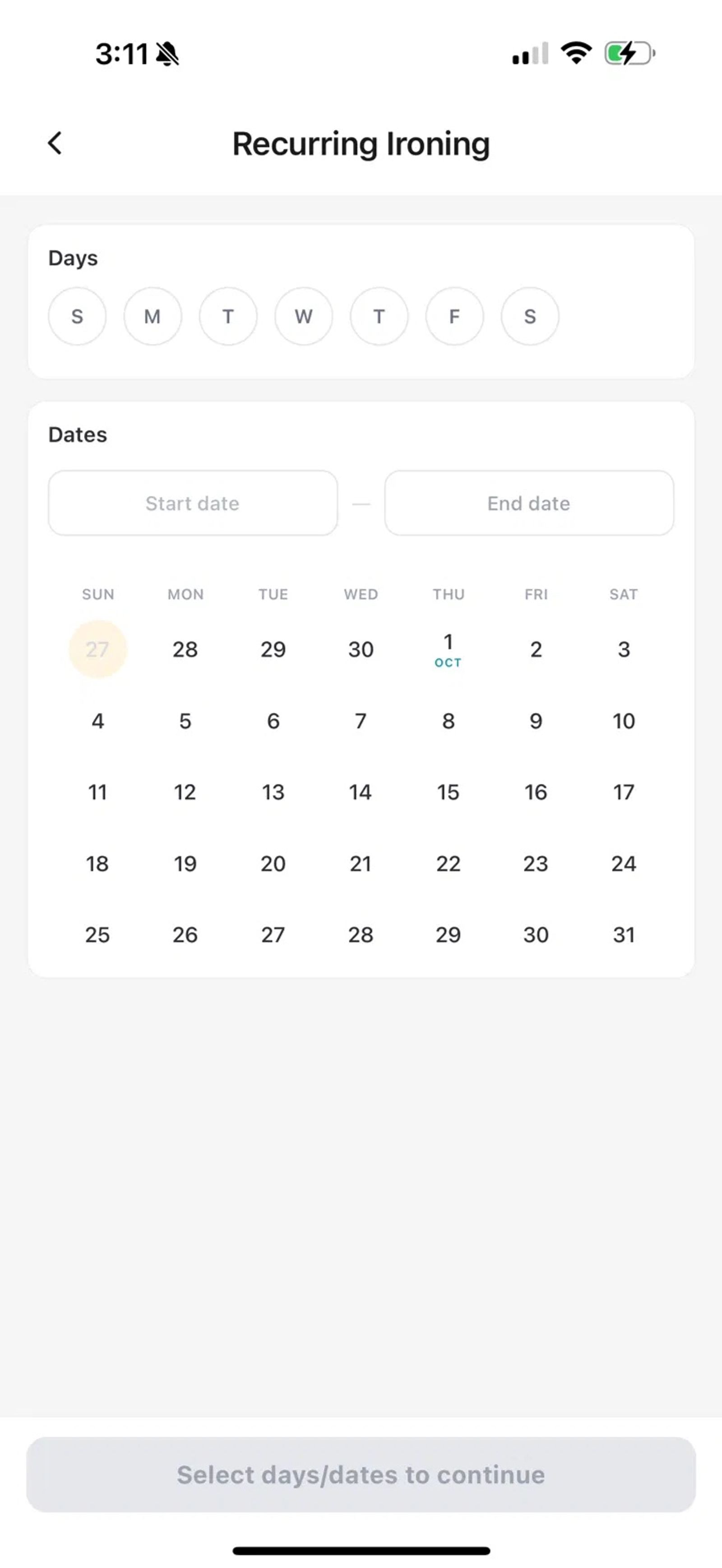
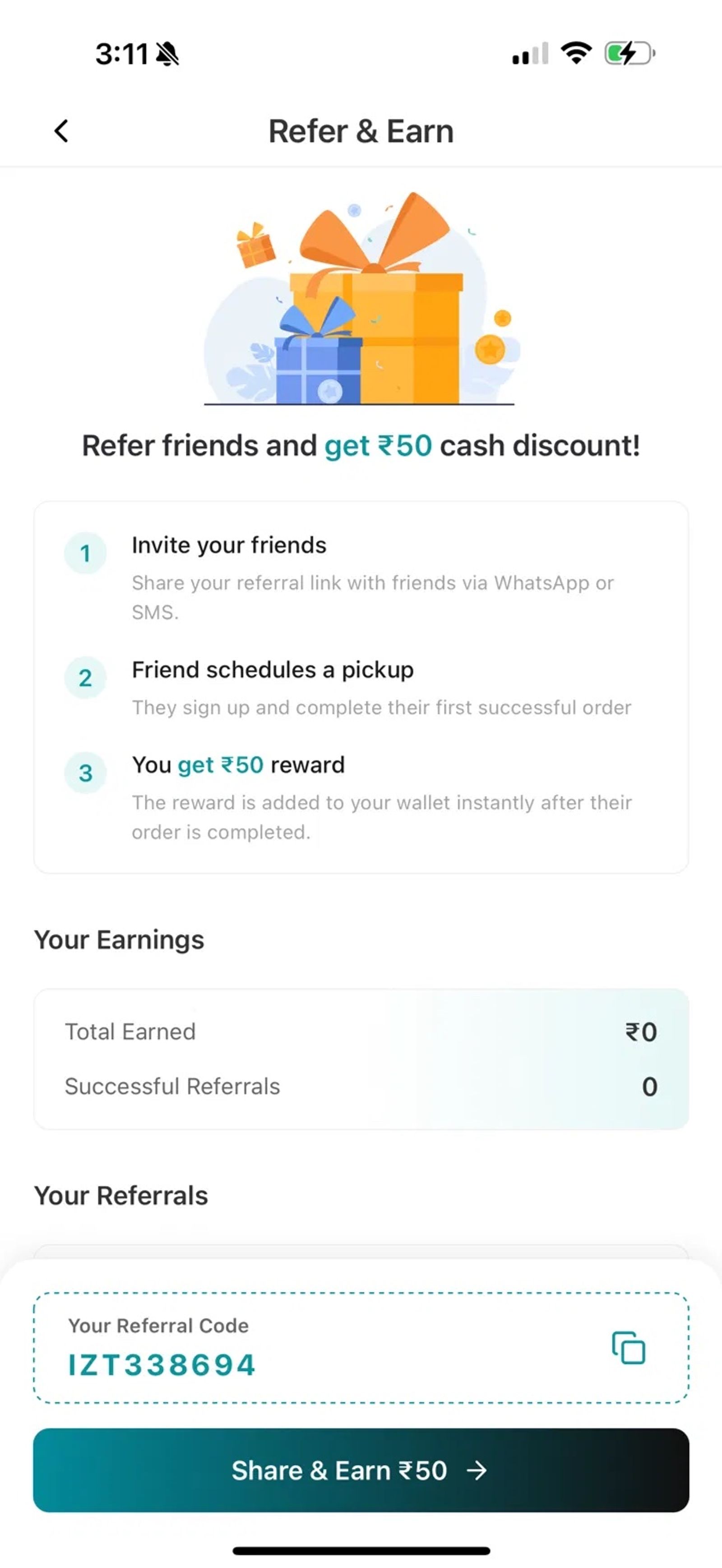
BeforeBooks from scratch every weekWhat shippedRecurring ironing, wallet offers and referrals